The Software Architecture Required to Scale Autonomous Operations

On any given day across the global energy landscape, a significant shift is underway. In Europe, an autonomous ground agent completes a scheduled mission through a restricted hazardous zone. Thousands of miles away in the Americas, an aerial device circles an active flare stack, capturing high-resolution thermal data points without triggering an operational shutdown.
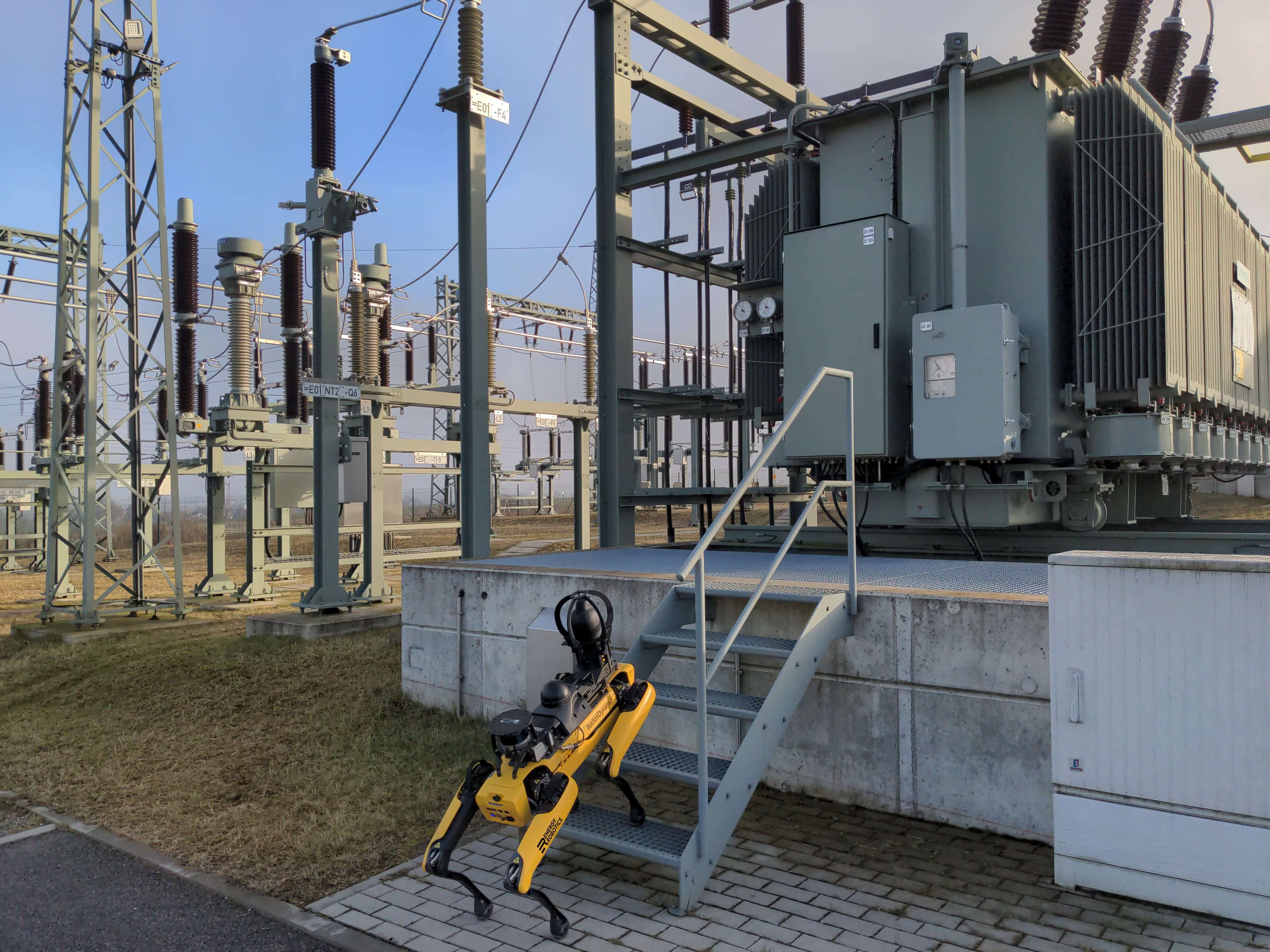
These are no longer isolated technology trials or proofs of concept. They are standard operating reality. The foundational engineering question - can the field hardware perform? - has been decisively answered. Autonomous devices routinely navigate complex environments, climb stairs, and capture specialized sensor feeds in conditions that restrict human access.
A significant gap remains, however, between a successful field deployment and a scalable, enterprise-wide autonomy program. Many enterprises adopt isolated digital capabilities at a single site, only to watch the investment stall the moment they try to replicate it.
To move beyond the ceiling of single-site success, the strategy has to shift - from procuring hardware to orchestrating intelligence.
The Industry 4.0 Capture Paradox
The industrial sector has spent more than a decade executing the Industry 4.0 mandate: instrumenting facilities with cyber-physical systems, deploying smart sensors, and generating unprecedented volumes of digital signal. Modern refineries are, by any measure, data-rich.
They are also, paradoxically, decision-poor.
The pattern is consistent. Enterprises have built the capture layer exceptionally well - more devices, more data points, and more historical records than at any moment in industrial history. Yet that data too often sits stagnant in secondary dashboards, waiting for passive human review rather than triggering the maintenance action it implies. Between the moment a sensor registers an anomaly and the moment a human acts on it lies a manual, fragmented latency loop, vulnerable at every step to oversight.
Three macroeconomic pressures are intensifying the paradox. Compressed margins and aging infrastructure force enterprises to extend asset life safely under a relentless "do more with less" mandate. Experienced field personnel - the people who can identify a failing asset by a change in its acoustic signature - are retiring faster than their tacit knowledge can be codified. And escalating regulatory complexity, stricter emissions monitoring, and a multiplying array of disconnected feeds are overwhelming engineering workflows built for a slower era.
Why Autonomy Programs Stall: Two Quiet Failure Modes
When autonomy initiatives fail to reach scale, it is rarely the result of a dramatic field incident. Programs succumb, almost silently, to one of two systemic failure modes.
The Bespoke Integration Trap
The first appears when an organization tries to lift a successful pilot from a flagship asset and drop it into secondary facilities.
The original trial worked precisely because a skilled team spent months custom-configuring a specific device, hand-mapping one facility's geometry, hardcoding mission plans, and engineering bespoke local integrations. That effort does not translate.
At the second site, the team meets different regulatory frameworks, unfamiliar network and security constraints, and a different mix of equipment manufacturers.
If bringing a second asset online costs the same engineering hours as the first, the financial model collapses. Software scales; bespoke hardware integration does not.
The Quiet Reversion
The second failure mode emerges after a single-site system has gone live. Engagement starts high as teams explore the new capability. But as the system settles into steady operation, it begins delivering data at its engineered volume - thousands of unfiltered data points every week.
Human attention does not scale alongside automated data generation, and information fatigue sets in. Without automated filtering, the technology becomes one more administrative burden.
Teams operating at full cognitive capacity quietly deprioritize the secondary platform, and over the following months they revert to the manual routines they trusted before.
The devices keep running their routes; the intelligence they produce goes unused. The result is an expensive asset delivering nothing to the bottom line.
The Silo Root Cause
Both failures trace to a single architectural flaw: systemic data and vendor silos. No enterprise designed its digital estate as one coherent project. It accumulated over decades, one procurement decision at a time.
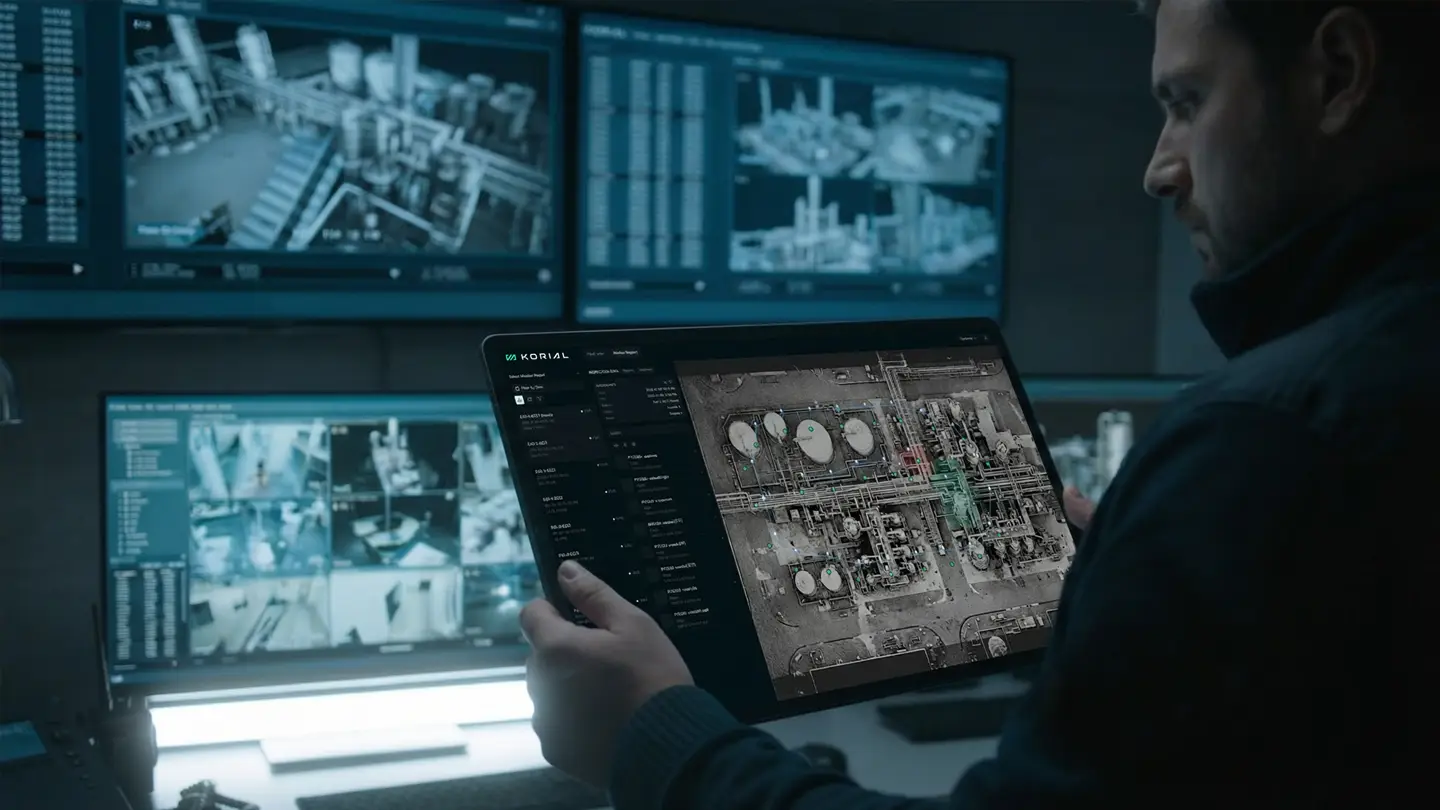
As a result, ground agents, aerial devices, and fixed fence-line sensors each sit in their own operational stack, tied to a proprietary, vendor-specific platform. Instead of producing a unified view of asset health, each new deployment adds another disconnected data layer - and forces engineers to act as manual integrators, stitching intelligence together by hand across competing interfaces.
The Architecture for Global Estates
Closing the utilization gap and dissolving these silos requires an intelligence layer defined by two design properties.
Property One: Device-Independent Abstraction
The enterprise intelligence layer must decouple the physical data-collection hardware from the analytics engine beneath it. One centralized layer ingests data uniformly, whatever device captured it.
Three characteristics make this real:
1. The engine must be device-independent, processing inputs identically whether they originate from a ground agent, an aerial device, or a fixed sensor.
2. It must support dynamic knowledge inheritance, so that when a new device type or a new manufacturer enters a facility, it plugs directly into the existing layer and immediately inherits the historical context and semantic models the system has already learned.
3. And it must deliver non-linear scaling economics: by standardizing the ingestion layer once, the cost of bringing each additional facility online falls with every deployment, eliminating the site-by-site reset that defeats the bespoke approach.
Property Two: Native Operational Integration
Automated mission intelligence must never live in a separate silo. It has to inject directly into the systems teams already open every day - the Enterprise Asset Management (EAM) and Computerized Maintenance Management Systems (CMMS) that run daily work.
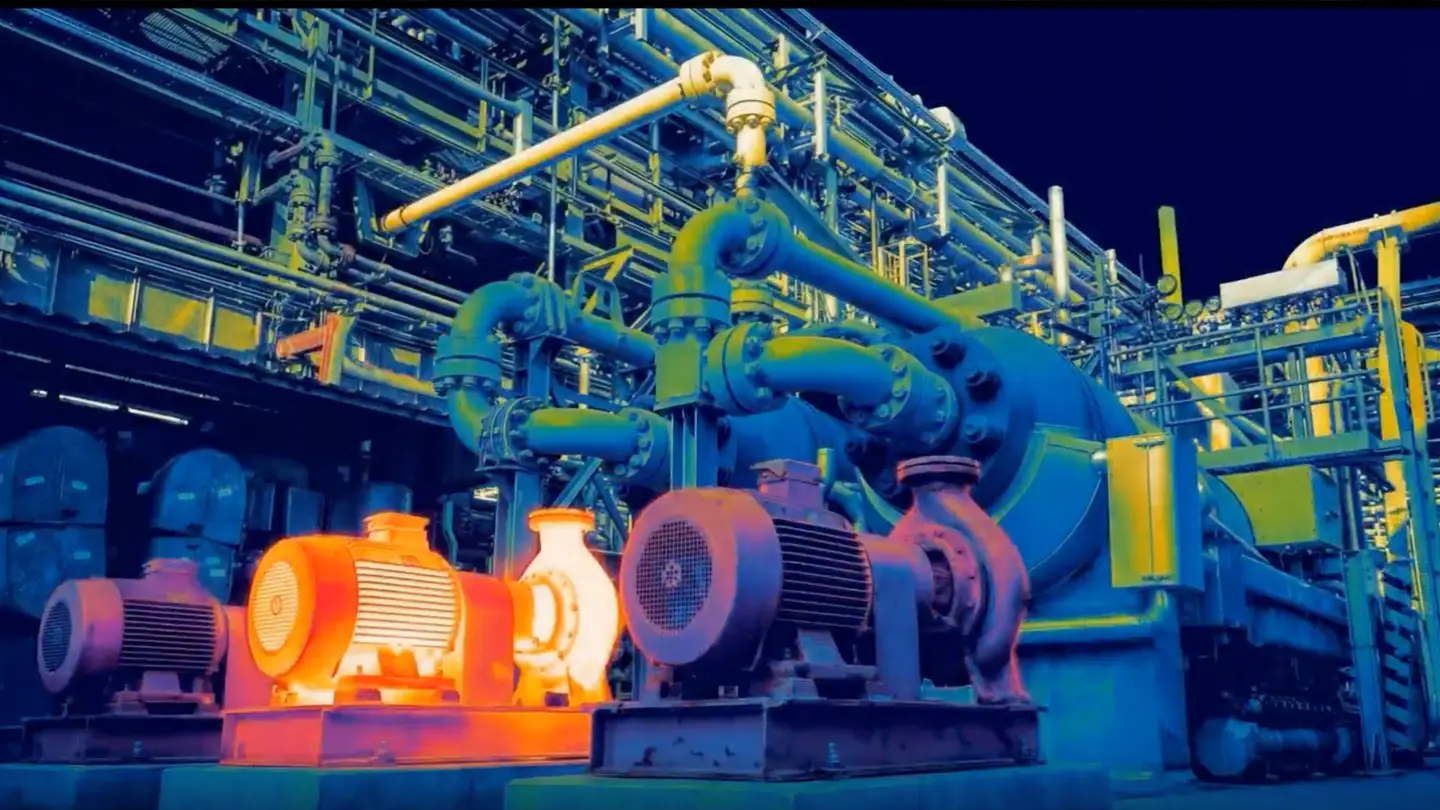
Consider a thermal anomaly detected on a critical pump at 3:00 AM. A mature architecture does not fire off an email and wait. It analyzes the historical context, verifies the anomaly against the asset's baseline, and natively generates a prioritized, pre-populated work order inside the site's primary maintenance system.
When the morning shift arrives, the intelligence is already waiting inside the interface they were going to open anyway. By embedding insight into existing habits rather than competing with them, an enterprise captures the value of autonomy without asking its field teams to change how they work.
The Agentic Frontier: From Reporting to Reasoning
The connected facility reaches its full potential when contextual AI is layered over unified asset data.
Once an architecture aggregates months or years of multi-modal signal - aerial thermal imagery, acoustic logs, fixed-sensor telemetry, and historical maintenance records - it moves past pattern-matching into operational reasoning.

Rather than digging through chronological logs to diagnose an issue, an operator can simply ask, in plain language: what mattered on last night's shift, and what should I watch today? The system synthesizes the context and answers with the evidence attached:
“03:14 - Pump B2 is showing abnormal vibration that matches the structural degradation pattern recorded before a component failure five months ago. Action: inspect the bearings and check the cooling loop.”
That is the shift that changes the economics. The autonomous estate stops being a system humans must monitor and becomes an intelligence that actively works alongside them.
The Path Forward
Turning an isolated pilot into a scalable autonomous estate is not a hardware procurement challenge. It is an enterprise integration objective. Proving that a device can execute a mission is a solved problem; the durable advantage belongs to enterprises that build the open, scalable, fully integrated intelligence layer above the hardware.
This is the layer Korial provides. By ingesting every data stream uniformly, embedding intelligence directly into the systems that run daily operations, and reasoning across the entire estate, Korial turns fragmented field data into a single source of operational truth - converting raw signal into measurable safety, faster risk mitigation, and long-term economic performance.
Proven in ATEX Zone 1 environments with global industrial super-majors, it is the standard on which the autonomous industrial future is built.
Related posts
More Perspectives from Korial
Your Drones Collect the Data. Who Controls It?
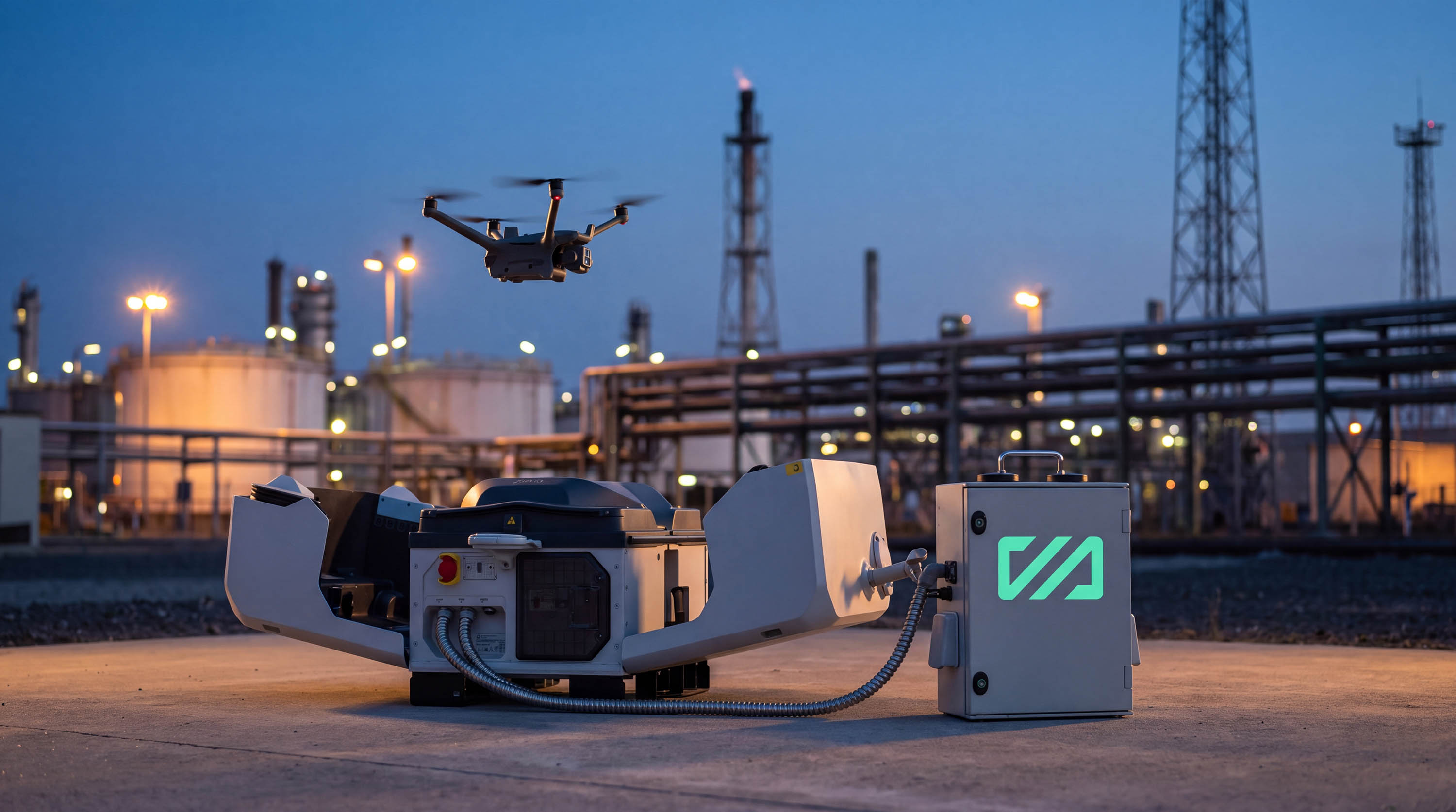
Every day your drones photograph your equipment, read your gauges, and scan for leaks. On many platforms, that data travels into the manufacturer's cloud, often outside Europe, before you ever see it. Since September 2025, European law says the data is yours. Here's how to take control of the path it travels, without replacing the fleet you already operate.
The Software Architecture Required to Scale Autonomous Operations
How a unified intelligence layer turns fragmented field-autonomy trials into a single, scalable enterprise estate.

The Crucial Role of Inspections in the Oil and Gas Industry
Reliable daily inspections are critical for safe and efficient operations in the oil and gas industry. This article covers the various inspection methods ensuring smooth operations

A Guide to Choosing the Ideal Inspection Robot for Your Facility
Looking for the perfect robot to streamline your operations? Our comprehensive guide helps you choose the ideal robot for your use case.
Industrial Gas Leak Detection: Definition, Types & Detection
Learn why detection of industrial gas leaks is critical to safety, the environment and efficient operations, and the best leak detection methods for different gases.

Turnaround Time (TAT) : A Comprehensive Guide
This guide about turnaround time (TAT) explains its impact across different industries and how to reduce it with different technologies such as autonomous robots and drones.
On-Demand Inspection Rounds: Revolutionizing Industrial Plant Inspections
Learn how operators are now only called into action under exceptional situations, while robots and drones perform multiple daily inspection rounds with no human intervention.

Automate Tank Roof Inspections with Advanced Industrial AI
Korial offers an automated drone inspection solution for tank roofs, reducing manual work and improving safety with AI-driven data analysis.
Ready to transform your operations?
Join leading enterprise organisations leveraging Korial to achieve operational autonomy.