For Solution Architects
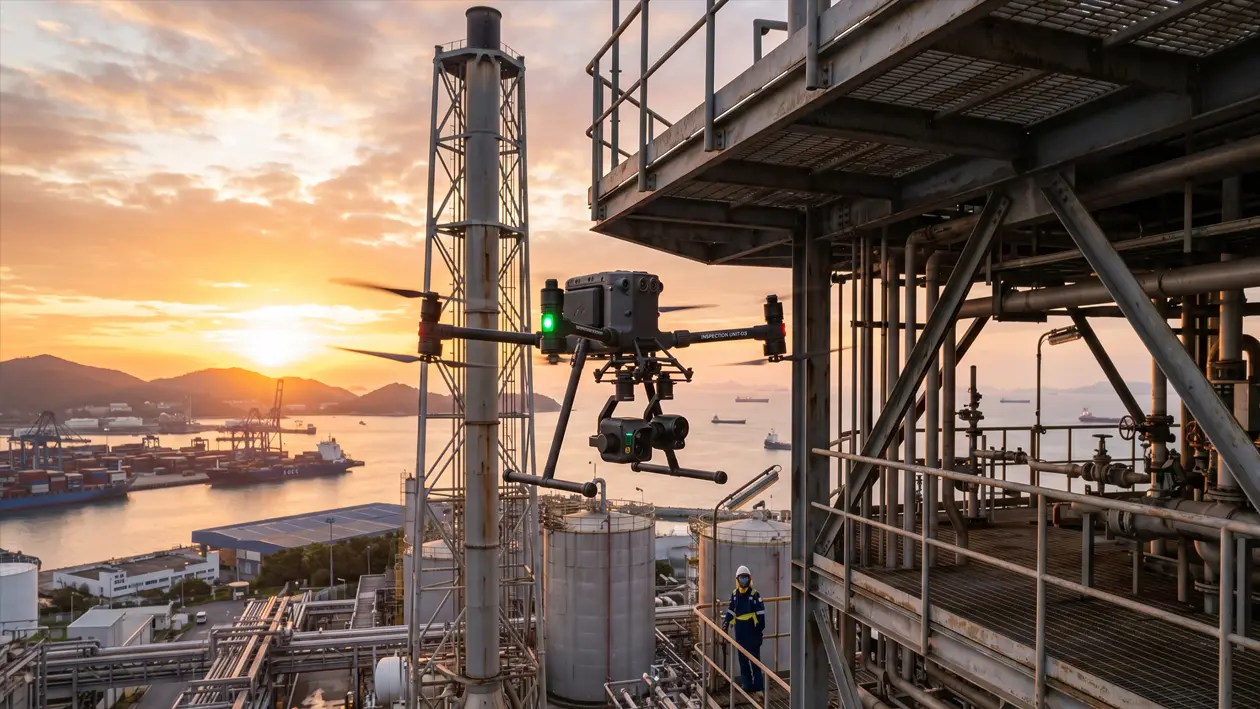
Korial is the industrial AI platform for autonomous operations - delivering robot and drone control, centralized AI intelligence, and enterprise integration as a unified architecture. One hardware-agnostic platform orchestrates mixed-vendor fleets, applies AI to transform sensor data into verified insight, then distributes intelligence and control across IT/OT systems.
Decouple Intelligence from Devices
Korial reads your estate in real time, separates signal from noise, and provides the hooks you need to embed this insight into existing IT and OT workflows. Centralize industrial intelligence in a shared AI core that ingests telemetry from robots, drones, cameras, and sensors, then turns it into contextual, queryable insight and autonomous action.
Korial continuously analyzes visual, thermal, acoustic, and process data, applies site and asset models, and flags what matters - from micro-leaks and thermal anomalies to emerging safety and reliability risks. It then orchestrates missions and workflows across your fleet and systems through APIs, ensuring decisions are traceable and reproducible rather than hidden in proprietary black boxes.
Logic no longer lives inside individual OEM stacks. Instead, you get a single, explainable behavior model you can govern, and evolve centrally - consistently across every facility.
From manual to autonomous operations
Move from manual inspection rounds to autonomous operations using a single platform architecture that provides consistent interfaces, governance, and observability across all deployments.
Stabilise behaviour across environments
Standardize inspection logic and mission execution across all environments through central AI governance, ensuring consistent autonomous behavior independent of vendor stacks or site conditions.
Make operational risk inspectable
Expose AI processing logic, data inputs, and threshold decisions behind each alert through the operational interface, enabling root-cause analysis, model tuning, and audit-ready compliance.
Free engineering capacity
Reduce time spent building and maintaining bespoke connectors, dashboards, and orchestration glue so your teams can focus on higher-value architecture and reliability work.
A Unified Operational Interface
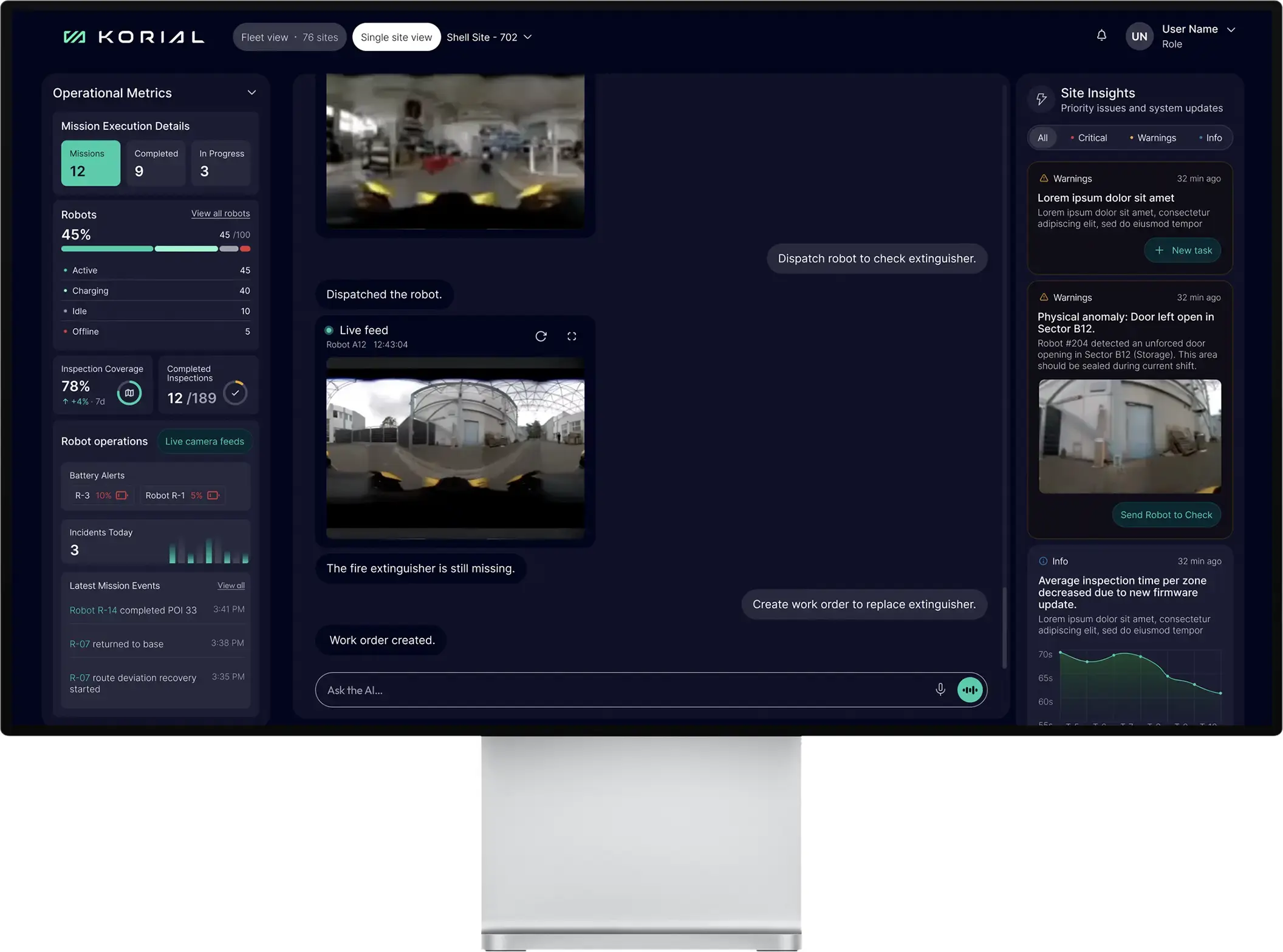
The platform layer provides the operational interface where KPI dashboards, agent-based AI interaction, and reporting converge in a single environment.
Operations, reliability, and architecture teams share one operational view of asset state and autonomous activity instead of reconciling multiple vendor UIs and data formats. Korial’s unified interface serves as the AI-driven command layer for autonomous operations, providing both human supervision and programmatic access that aligns with your reference architecture.
Operational Insight & Intelligence
The data layer is where Korial transforms raw sensor data into verified operational insight. AI skills process visual, thermal, acoustic, gas sensor, and LiDAR data from ICS, PLCs, and field devices through centralized AI inference - removing reliance on vendor-specific processing and consolidating intelligence generation under Korial's control.
This self-reinforcing data layer enriches multi-modal telemetry with AI-generated metadata and inspection data, feeding it back into continuously improving intelligence architecture. Mission orchestration uses AI-driven anomaly detection to flag what matters in real time - thermal drift, micro-leaks, emerging reliability risks- then coordinates missions and triggers workflows across your fleet and enterprise systems.
Operators can teach new inspection behaviors through the operational interface by demonstrating them once during remote teleoperation; AI automatically converts that expertise into repeatable autonomous missions across the entire fleet. Intelligence no longer resides in scattered device stacks. Instead, embedded AI skills provide a single, explainable behavior model you can version, govern, and evolve centrally - controlled through one operational interface and consistent across every facility.
Real-time AI-driven anomaly detection and centralized intelligence processing reduce Mean Time To Detect (MTTD) by replacing manual inspection rounds with continuous autonomous monitoring, visible through unified KPI dashboards.
Bidirectional IT/OT Connectivity
The integration layer handles protocol translation and data exchange between Korial and external enterprise systems. Data ingestion normalizes telemetry from heterogeneous devices, while the API provides the programmable interface for secure, governed integration.
Enterprise data distribution manages northbound flows, distributing AI-verified insights, mission outcomes, and anomaly detections into ERP, EAM, Asset Management Systems, SCADA, historian, and ICS platforms through secure APIs, preserving time-series context for trending and root-cause analysis rather than creating new silos. Threshold breaches arrive with full context - inspection payloads, AI-generated evidence artifacts, asset identifiers, and suggested corrective actions - making it straightforward to wire into existing CMMS workflows and automation engines.
Programmatic fleet triggers enable bidirectional control through southbound flows: enterprise systems can create and modify points of interest, define inspection missions, and start or stop autonomous execution - all through the same API layer that exports AI-verified insights. Integration governance monitors API usage, data flows, and integration health end-to-end through the platform interface, keeping distributed autonomous operations auditable, observable, and compliant as adoption scales.
The platform maintains minimum 90-day data retention with sovereign AI capabilities for local annotation and training, ensuring compliance with national data privacy requirements and enterprise governance mandates.
Simulation and Validation
Korial’s immersive site model layer combines digital twin technology with simulation capabilities, enabling architects and engineers to design and test autonomous behaviors before deployment. Korial builds a persistent digital representation of facilities using point cloud and reality-capture data, continuously enriched by AI as devices traverse the site during live missions.
Immersive site view enables teams to navigate facilities remotely in 3D and understand infrastructure context with spatial clarity. Simulation and virtual testing validate inspection routes, mission parameters, and failure modes against the continuously updated site model, enabling you to assess consequences- coverage gaps, cycle time, resource contention - before impacting production.
Mission optimization refines routes and operating parameters inside the AI-powered digital twin, then proven configurations promote into the operational layer through governed pipelines. You reduce rollback risk through virtual testing, use fleet benchmarking to eliminate trial-and-error hardware decisions across vendor-agnostic fleets, and establish repeatable rollout patterns for multi-site deployments.
Operational Continuity
The support as a service layer delivers tiered operational support that scales from business-hours technical assistance to full 24/7 coverage across regions.
Every level includes a dedicated customer success manager, structured onboarding, and user training so teams can adopt Korial into live operations with minimal friction.
For mission-critical environments, higher tiers add faster response times, round-the-clock availability, and direct access via ticket and chat channels rather than ad-hoc support paths. At the top tier, Korial’s customer success staff can supervise or fully execute robot and drone missions - providing daily mission management for ground robots and drones where required - so autonomy continues even when local capacity is constrained.
Long-term success architecture wraps these services into a lifecycle model, combining knowledge base access, ongoing performance reviews, and guidance on expanding to new sites or devices. The result is an operational support layer that matches the criticality of each deployment, from initial rollouts to always-on autonomous operations.
Deployment Models
Korial supports cloud SaaS and in‑country hosted deployment models eso architecture decisions can follow data residency, sovereignty, and regulatory requirements rather than vendor constraints.
The same industrial AI platform and operational interface are delivered consistently across these options, allowing you to standardize on one reference architecture even when sites require different hosting arrangements.
Clear governance models and granular role‑based access control span both the platform interface and APIs, ensuring least‑privilege access to robots, data, and integrations. Network segmentation and connectivity patterns can be aligned with existing IT and OT security designs, so Korial fits into your established controls instead of forcing exceptions in corporate or plant‑level architectures.
By standardising how industrial insight is created, validated, and delivered across your estate, Korial ensures every new deployment extends the same architecture instead of introducing new exceptions. You protect autonomy roadmaps from vendor churn, reduce integration and maintenance overhead, and give the business consistent levers for reducing downtime and operating cost.
With over 100 deployments in demanding industrial environments, Korial has proven it can provide objective, high‑integrity insight and 24/7 diagnostic oversight at scale – across mixed fleets and heterogeneous systems landscapes.
42%
34%
1m+
Korial is proven in the field with deployments across some of the largest and most complex industrial facilities worldwide. From tank farms and refineries to specialty chemical plants, customers use Korial to standardize governance, improve response times, and keep people out of harm’s way.
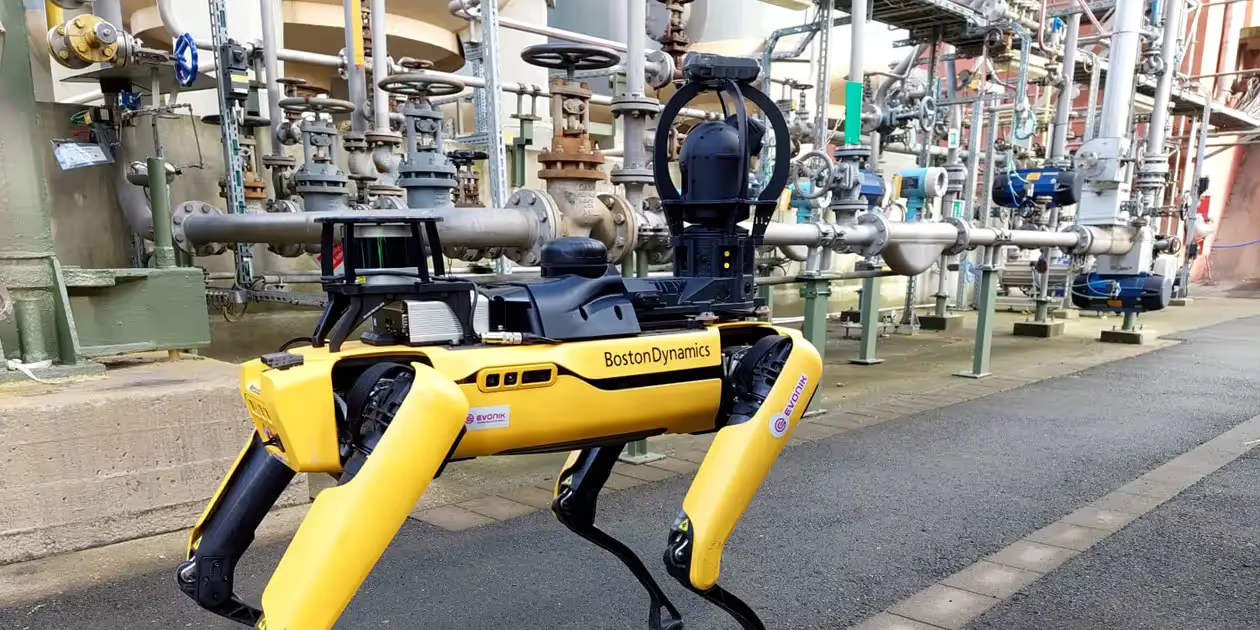

At Evonik, Korial delivers a continuous, high‑quality asset condition dataset, so engineers spend less time on routine rounds and more time improving process performance and reliability.
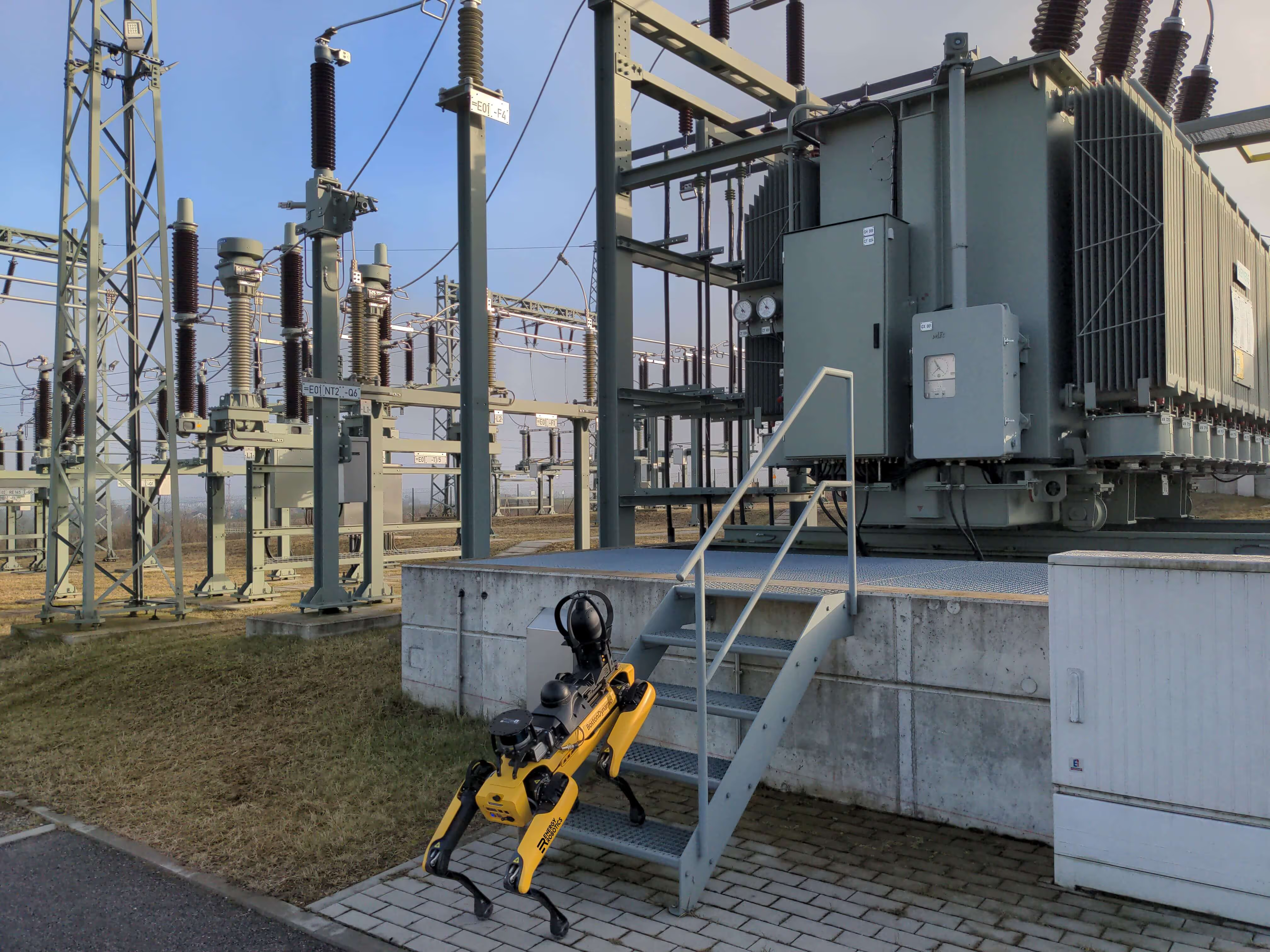

By decoupling intelligence from the underlying hardware, E.ON’s grid operators preserve hardware flexibility while gaining a repeatable blueprint for scaling autonomous inspection as grid renewal accelerates.

At Shell Energy and Chemicals Park Rheinland, Korial coordinates a mixed fleet of ground robots and an aerial system to deliver continuous, risk‑aware inspection and routine rounds for asset condition monitoring.


illwerke vkw AG needed to replace manual, weather-dependent inspection rounds in an environment where access is difficult, conditions are hazardous, and the cost of missed anomalies is high.
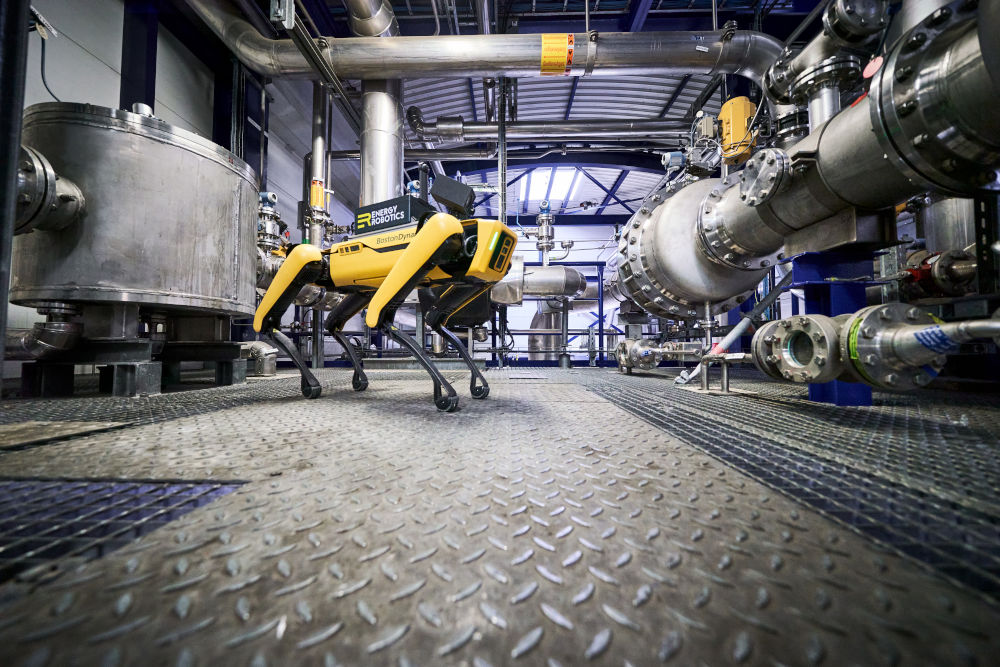

Merck, one of Europe's first adopters of Boston Dynamics Spot for industrial inspection, needed to replace manual monitoring of its maintenance-intensive thermal exhaust treatment facilities.
Ready to transform your operations?
Join leading enterprise organisations leveraging Korial to achieve operational autonomy.