Traditional industrial robots
Based on predefined automation: they act, but only on what was scripted in advance.
Sense
Think
Act
EU co-funded research project
 Think slow. Act fast.
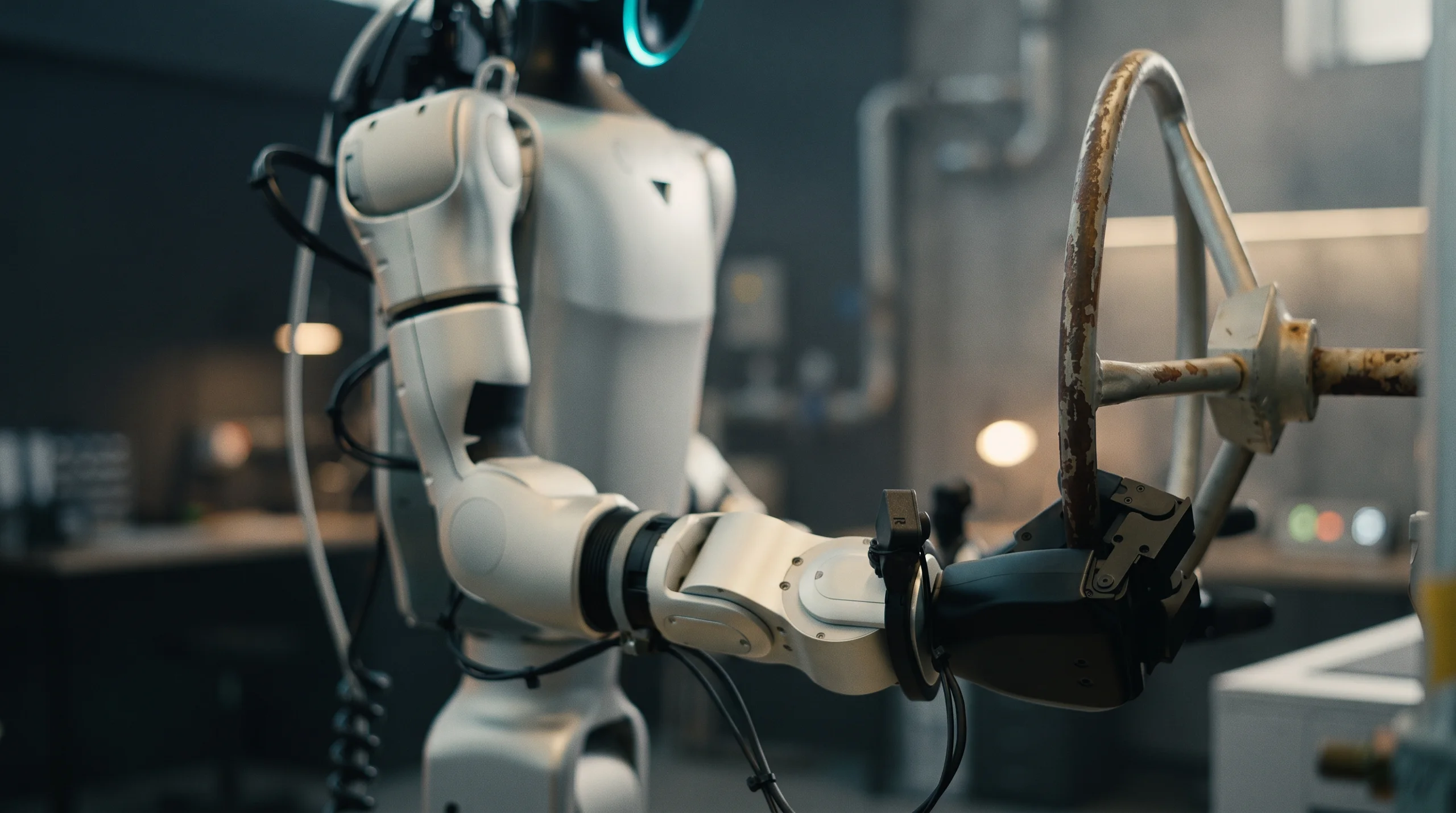
Autonomous Robotic Inspection and Manipulation via Elastic Hybrid Vision-Language-Action (EH-VLA) models. ARIM is publicly funded R&D: the capabilities described here are under development and not yet part of Korial’s commercial offering.
ARIM is Korial’s research project in the EIC Advanced Innovation Challenge on Physical AI: building the software that lets inspection robots and humanoids move from monitoring a facility to safely maintaining it.
EIC
10 / 425
2026–29
Grant
Industrial operations in the energy, chemical and utility sectors face critical operational hurdles. Three of them stand between today’s inspection fleets and safe, autonomous maintenance.
High risk & labour shortages
Maintenance in hazardous environments exposes workers to severe safety risks, while the energy sector faces a growing shortage of skilled workers.
7M
Projected global deficit of skilled workers in the energy sector by 2030. Source: Hydrogen Group
Data inconsistency
Manual inspections suffer from variable quality, human error and dangerous monitoring gaps in ageing European infrastructure.
Example: Buncefield, UK, 2005
A level gauge that had been sticking for months and a disabled safety switch went unnoticed. The overfilled fuel tank caused a massive explosion: over 40 people were injured and the fire burned for five days. Source: COMAH Competent Authority (HSE)
The missing link in Physical AI
Mobile robots already excel at contactless “sense and monitor” tasks. Existing fleets cannot yet combine real-time perception, reasoning and safe physical intervention.
Sense + Think + Act
Real-time perception, reasoning and safe physical intervention in one system.
Korial introduces the Elastic Hybrid Vision-Language-Action (EH-VLA) architecture.
EH-VLA is a modular AI software stack that turns standard inspection robots and humanoids into full industrial maintenance workmates, with autonomous reasoning and task execution capabilities.
Based on predefined automation: they act, but only on what was scripted in advance.
Focused primarily on monitoring: they see and report, without physical intervention.
Adds the thinking. Kore, Korial’s AI layer, uses an LLM and agentic workflows to turn live robot and drone data into verified insights and decisions, such as early detection of leaks or thermal anomalies. The physical fix is still done by people.
Adds the doing and closes the loop: detects a problem, reasons about the right response and safely executes a physical intervention.
Unlike traditional industrial robots based on predefined automation, or inspection robots focused primarily on monitoring, ARIM aims to close the loop between perception and action.
Building on Korial’s field-proven inspection platform and real-world operational data, ARIM brings Physical AI from laboratory environments into real industrial applications.
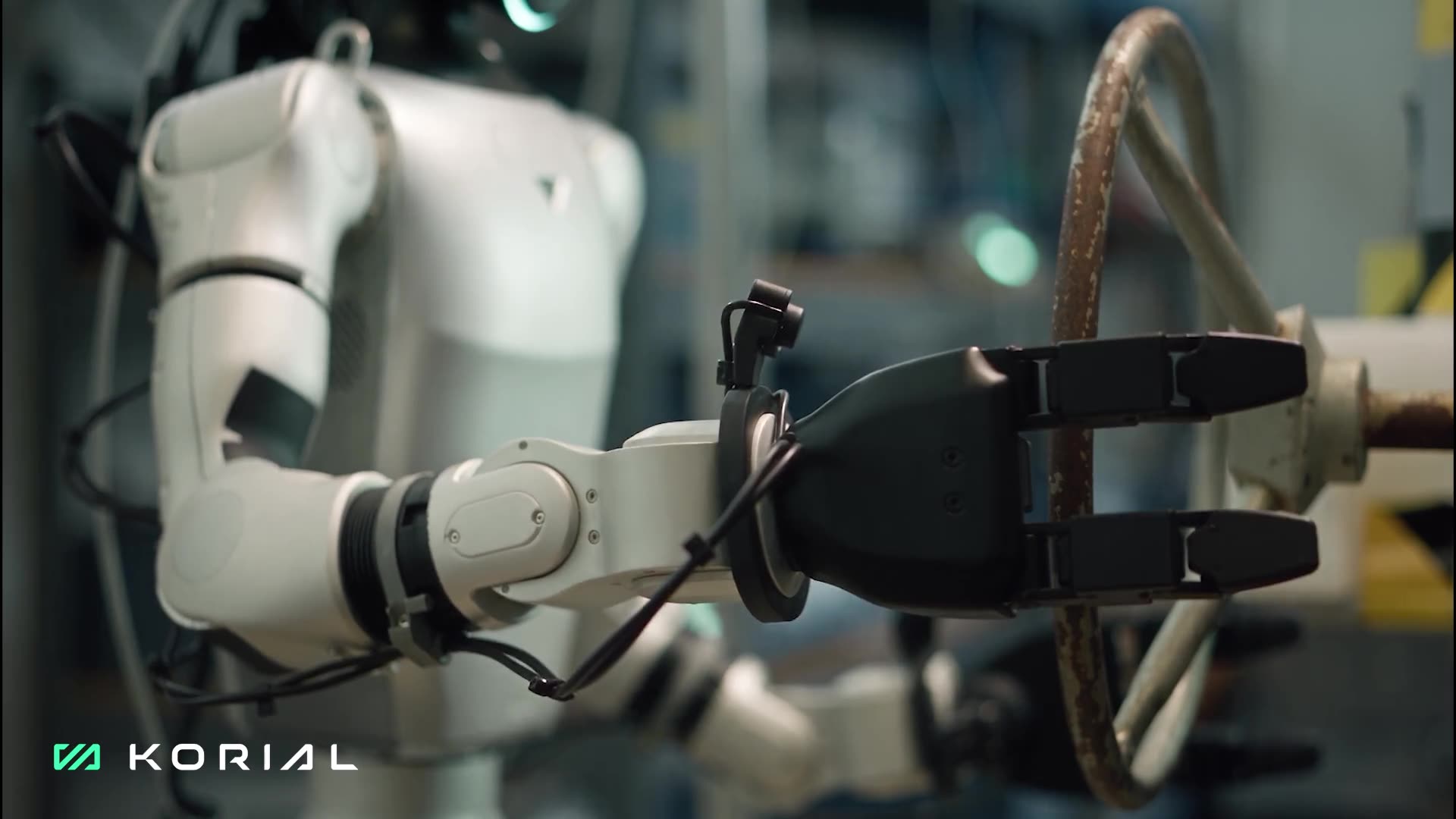
Think slow
Perceive, understand, reason, plan.
Act fast
Navigate and manipulate locally.
Fail safely
Predictable fallback behaviour.
Five stages take ARIM from an inspection finding to a completed, verified maintenance action, and feed what was learned back into the next mission.
Inspection robots observe the industrial environment, identifying asset conditions, anomalies and potential maintenance actions.
AI-based reasoning interprets the situation and generates a structured intervention plan that incorporates safety constraints.
The selected robot translates the plan into physical actions, combining autonomous navigation and manipulation for maintenance tasks.
Safety and fallback behaviours guarantee predictable operation under uncertainty, degraded connectivity or unexpected conditions.
Operational data and simulated scenarios support continuous improvement, under operator control and in compliance with industrial confidentiality, cybersecurity and data-protection requirements, including GDPR.
Every intervention feeds back into detection: the system improves with each deployment loop.
Two stages take EH-VLA from technology validation at TRL 5 to operational deployments with industry partners at TRL 6–7.
Progression to Stage 2 depends on the EIC’s review of the Stage 1 results against the challenge’s success criteria.
Worker safety
Asset uptime
Technological sovereignty
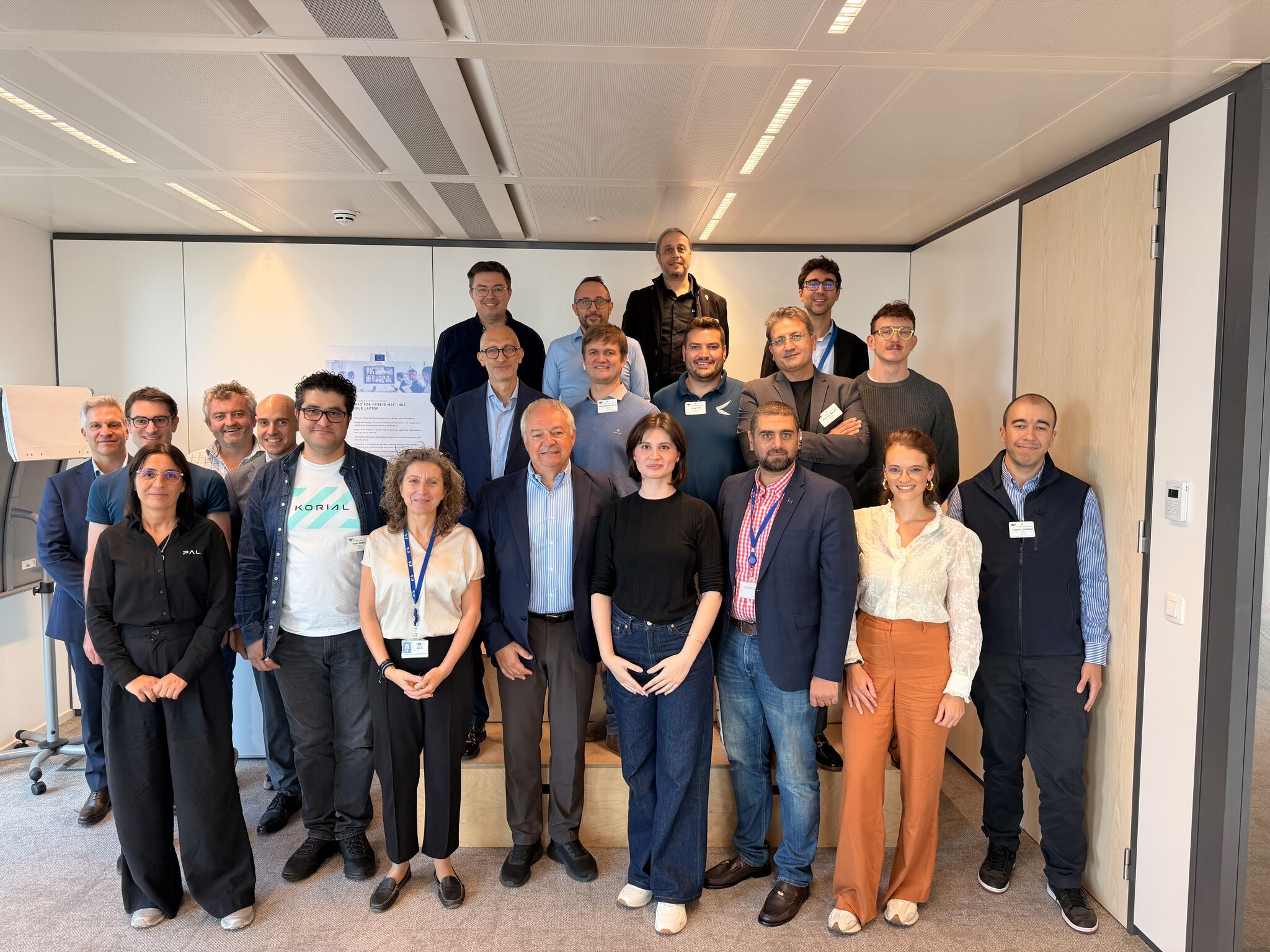
Korial joined the kick-off of the EIC Advanced Innovation Challenge on Physical AI in Brussels, alongside the other teams selected for the challenge.

This project has received funding from the European Innovation Council under the European Union’s Horizon Europe research and innovation programme under grant agreement No 101328770.
Interested in ARIM?
Talk to our team about the project, research collaboration and the path to operational pilots.